Bright Stars Support Center
Applied Behavioral Analysis
Bright Stars Support Center provides early intervention services for children with Autism Spectrum Disorder and related conditions.
We offer Applied Behavior Analysis (ABA) therapy, an evidence-based approach that helps children build communication, social, and daily living skills in a supportive environment.
(763)415-2568
What is Applied Behavioral Analysis?
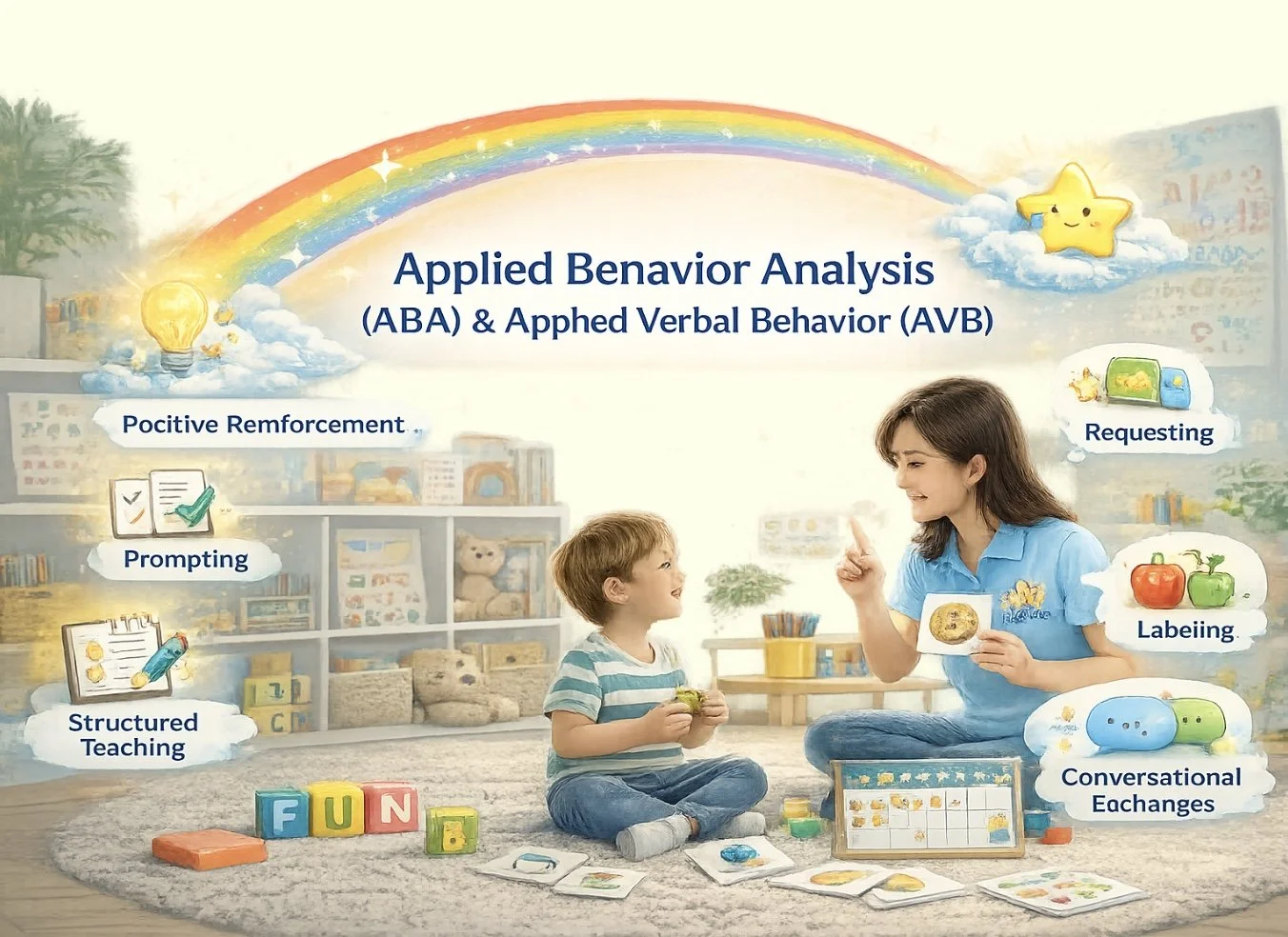
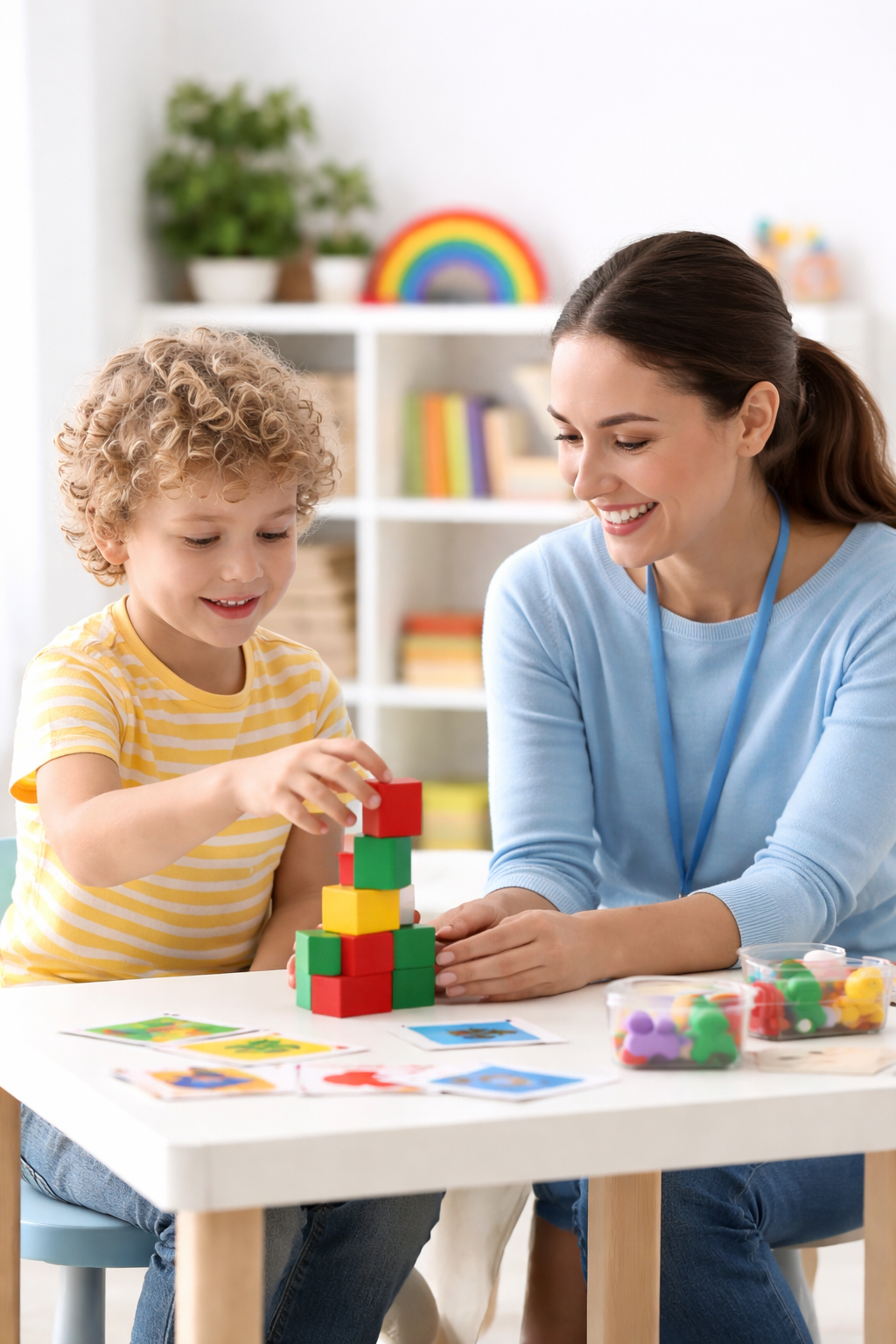
At Bright Stars Support Center, our services are guided by Applied Behavior Analysis (ABA), an evidence-based approach that helps children build important life skills by understanding how behavior interacts with the environment. ABA uses proven strategies such as positive reinforcement, prompting, and structured teaching to help children learn new skills and reduce behaviors that may interfere with development.
Within ABA, we also incorporate Applied Verbal Behavior (AVB) to support communication development. AVB focuses on teaching children how to use language meaningfully in everyday situations. Instead of simply teaching words, this approach helps children learn how to request, label, and interact socially, strengthening their communication and independence.
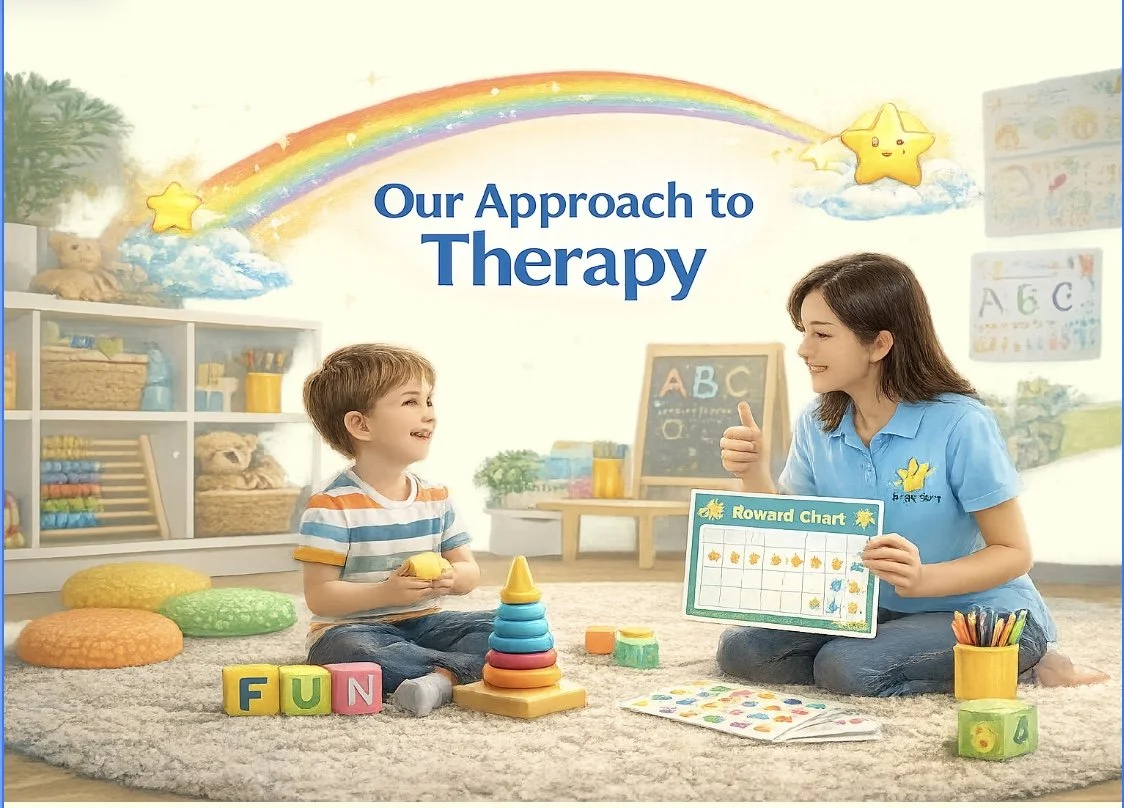
At Bright Stars Support Center, we provide individualized therapy designed to support each child’s unique development. Therapy begins with building a positive connection with the child while assessing their current skills and strengths. This helps our clinical team develop personalized goals that guide each child’s learning journey.
We believe that children learn best in a supportive, engaging, and motivating environment. Our therapists use play-based activities and positive reinforcement to make learning both meaningful and enjoyable. Because every child learns differently, our therapy plans are flexible and adjusted as each child progresses.
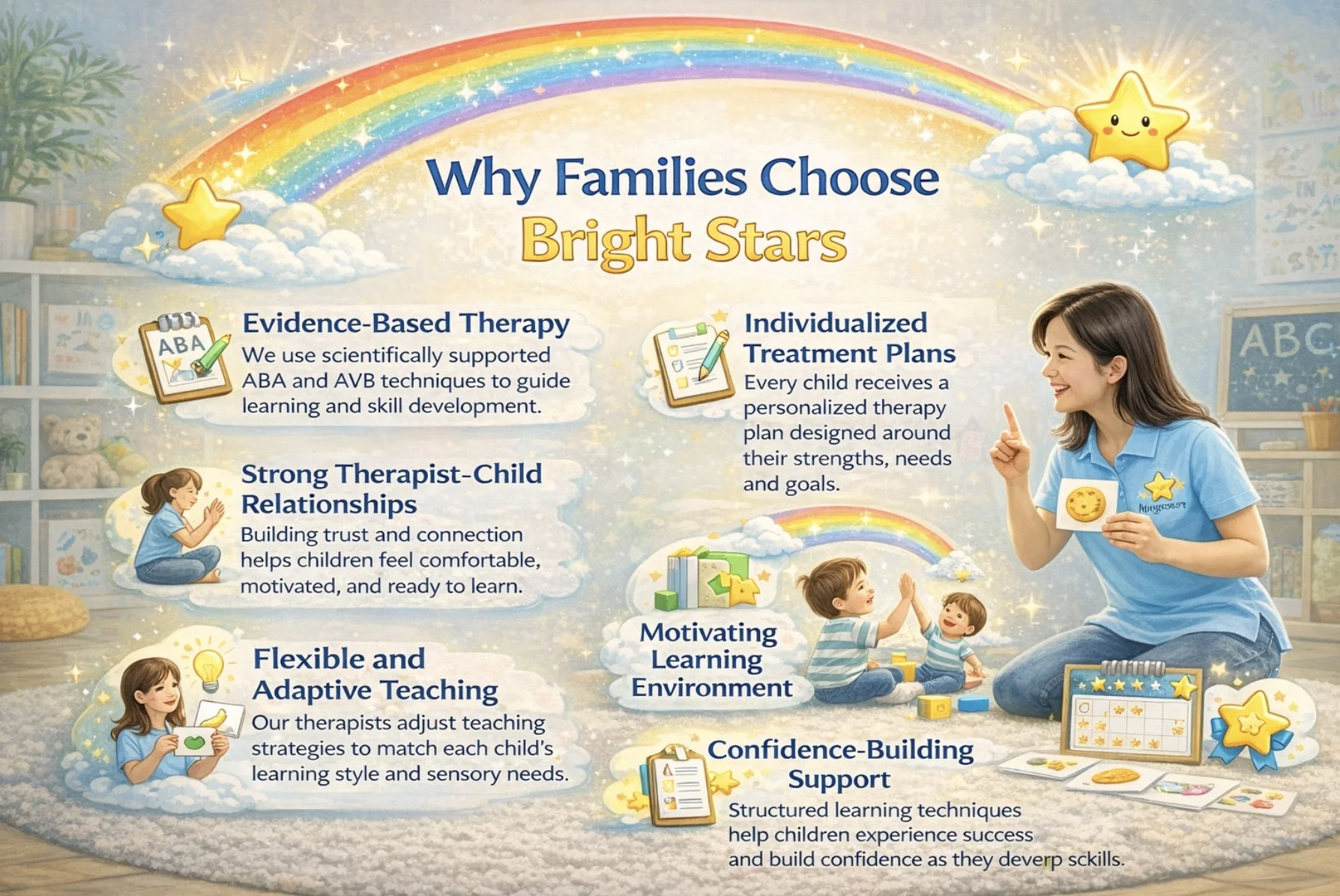
At Bright Stars Support Center, we believe every child has the ability to grow, learn, and shine. By combining individualized care with evidence-based therapy, we help children build the communication, social, and life skills they need to thrive.
Treatment Progress and Outcomes
At Bright Stars Support Center, every child’s progress is unique. Because each child develops at their own pace, our clinical team closely monitors progress throughout therapy. Treatment goals and skill development are regularly reviewed to ensure that each child continues moving forward and receiving the support they need.
We believe that strong collaboration with families is essential. Our team works closely with parents and caregivers to discuss progress, answer questions, and adjust therapy plans when needed. Through open communication and partnership, we help families stay involved and informed throughout their child’s therapy journey.
Factors That May Influence Progress
Each child’s therapy experience may be influenced by several factors, including:
Diagnosis and developmental profile
Age when therapy begins
Previous or concurrent therapies
Intensity and consistency of treatment
Developmental, physical, or neurological conditions
Medical considerations or health conditions
Environmental and educational settings
Family involvement and support
At Bright Stars Support Center, our goal is to provide individualized care that supports every child’s growth, independence, and long-term success.
Small Group Learning Goals
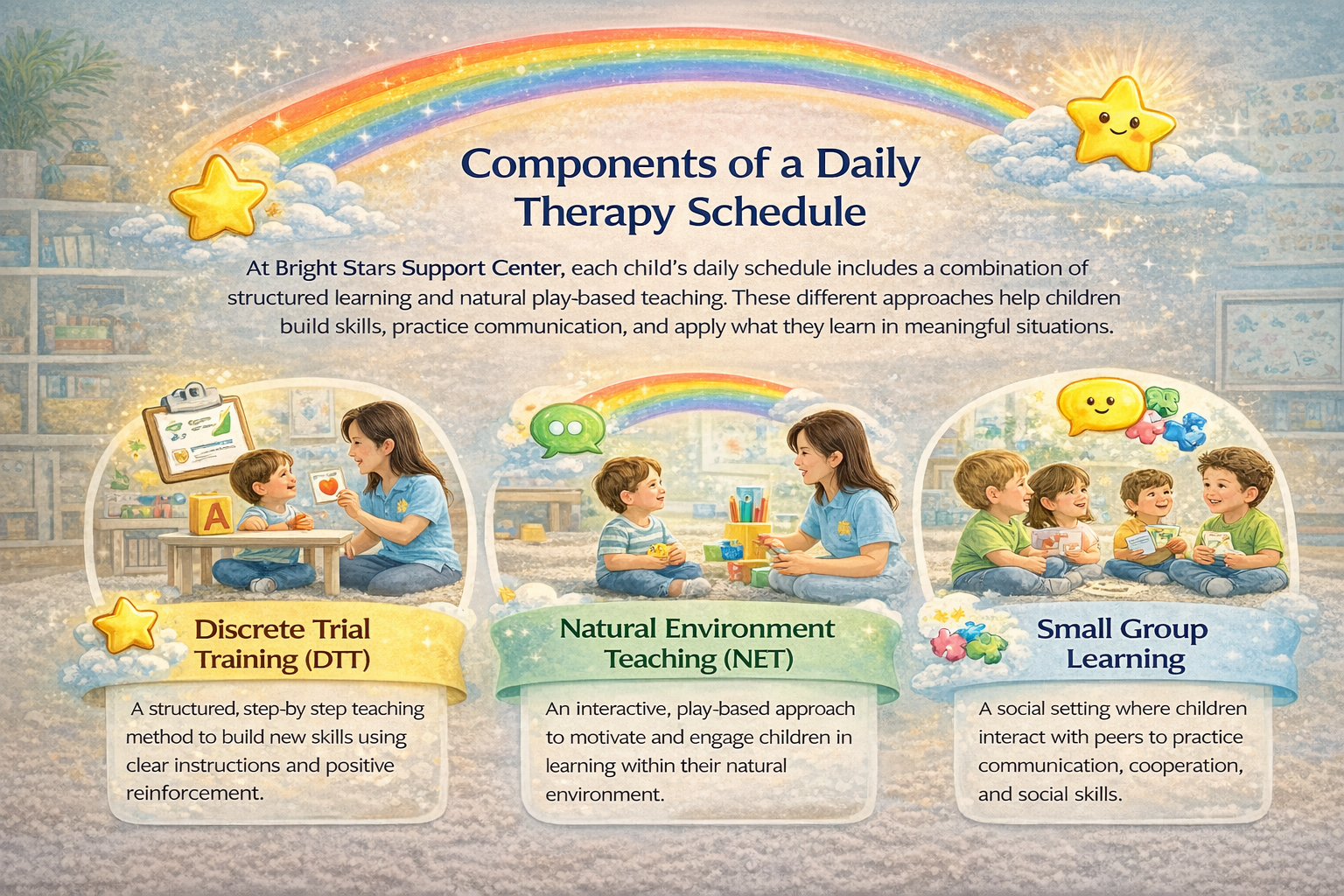
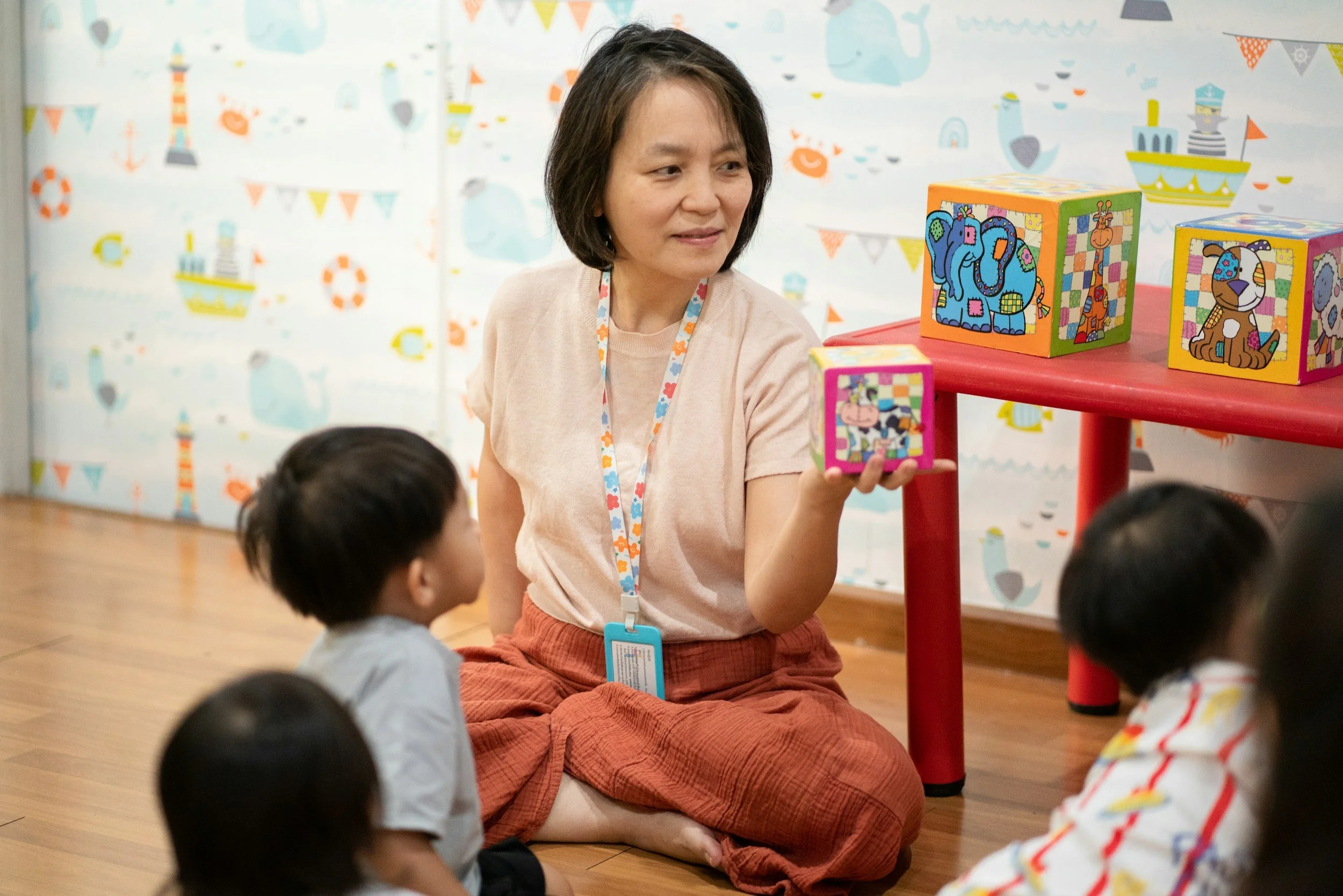
At Bright Stars Support Center, small group activities provide children with opportunities to practice important social, communication, and learning skills while interacting with their peers. These sessions help children build confidence and learn how to participate in shared activities in a supportive environment.
Skills Developed During Small Group Activities
Increasing peer interaction and social engagement
Practicing turn-taking and waiting appropriately
Improving listening and responding to instructions
Following new one- and two-step directions
Learning through imitation and observation of peers
Encouraging positive peer support and interaction
Building connections and friendships with others
Developing self-confidence and self-esteem
Practicing cooperation during group activities
Learning classroom routines and expectations
Asking questions and requesting information using “WH” questions
Completing multi-step tasks independently (such as art or learning activities)
Applying and generalizing skills learned during therapy sessions
Through small group learning, children gain valuable experience interacting with others while continuing to develop communication, independence, and social skills.
-
The Early Learner Program at Bright Stars Support Center is designed for young children between the ages of 1 and 4 years who are diagnosed with Autism Spectrum Disorder or other developmental delays.
At this stage of development, children learn best through play, exploration, and natural interactions. For this reason, therapy in the Early Learner Program focuses heavily on Natural Environment Teaching (NET). This approach allows children to learn important skills during everyday activities such as playtime, social interaction, and daily routines.
Our therapists focus on developing foundational skills in areas such as:
Communication and early language
Social interaction
Play skills
Daily living skills
Attention and engagement
Early learning readiness
Each child receives an individualized therapy plan based on their developmental needs, strengths, and learning style. Therapy activities are designed to feel natural and engaging while helping children build important skills step by step.
Throughout the day, therapists create many opportunities for children to practice new skills in meaningful situations, helping them build confidence and independence.
Parent Involvement
At Bright Stars Support Center, we believe that family involvement is an important part of a child’s progress.
Parents and caregivers are encouraged to participate in their child’s learning journey through:
Parent education and guidance
Hands-on observation and participation during therapy sessions
Individual consultation with the child’s therapy team
Learning strategies that support skill development at home
By working together with families, we help children apply the skills they learn in therapy to their home and daily life environments.
Children in the Early Learner Program may attend:
Morning sessions
Afternoon sessions
Full-day therapy programs
-
The Intermediate Learner Program supports children who are ready to expand their skills through more structured learning and increased peer interaction.
Children enter this stage once they have developed basic cooperation, communication skills, and readiness for more structured teaching environments.
In this program, therapy continues to focus on building important developmental skills, including:
Communication and language development
Social interaction with peers
School readiness skills
Following directions and routines
Group participation
Independent task completion
Children continue to receive individualized instruction, while also participating in small group learning activities. These group experiences help children learn how to interact with peers, work together, and participate in shared activities.
Group activities also help children:
Develop friendships
Learn to take turns
Follow group routines
Participate in cooperative learning
The Intermediate Learner Program includes a structured daily schedule that helps children practice everyday life skills such as:
Arrival and transition routines
Social play with peers
Interactive learning activities
Fine motor activities
Communication practice
Group participation
Therapists provide guidance and support during these activities while gradually encouraging children to develop independence and confidence in group settings.
-
In addition to our core therapy programs, Bright Stars Support Center may offer specialized services designed to meet specific developmental needs.
These services may include focused support for:
Communication development
Social skills
Behavioral regulation
School readiness
Parent coaching and support
Each program is designed to support the individual goals of the child and family, ensuring that therapy remains flexible, supportive, and meaningful.
Learning Programs at Bright Stars Support Center
Interested? Click the contact button below and to know more
Want to enroll your child but don’t know how? Click how to enroll button to help you the step by step guide on enrollment process.
❊ Helping Every Child Shine Brighter
At Bright Stars Support Center, we provide personalized, evidence-based therapies that help children with autism build communication, social, and daily living skills. Our compassionate team works closely with families to support each child’s growth and success.
Applied Behavioral Analysis
Occupational Therapy